Diwali 2026 Safety Guide for High-Rise Societies: Firecracker Rules, Fire Safety and Emergency Tips
Green crackers are allowed in Delhi NCR on 7 and 8 November within fixed timings. Here's what the rules say, how to protect your flat and balcony, what to do if there's a fire in a high-rise, and how RWAs can prepare.
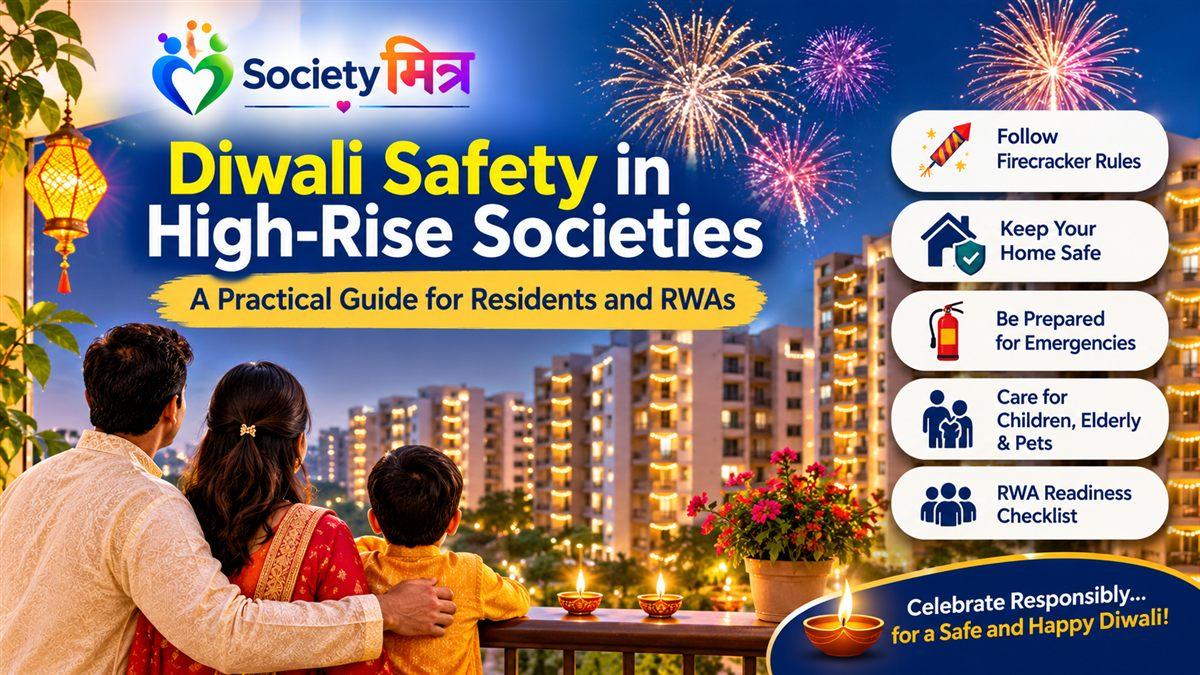
Diwali in a housing society has its own charm. Balconies light up with diyas and fairy lights, children gather with their phuljhadis, neighbours exchange sweets, and the whole community feels a little more festive.
But celebrating Diwali in a high-rise also calls for some extra care.
A rocket can land on a balcony several floors above the ground. A diya placed too close to a curtain can start a fire. An overloaded extension board can turn festive lighting into an electrical hazard. With so many families celebrating at the same time, even a small mistake can affect more than one home.
A little preparation can prevent a lot of trouble. Here's what residents and RWA committees should keep in mind this Diwali, from firecracker rules and balcony safety to emergency response and first aid.
Firecracker rules in Delhi NCR this Diwali
On 2 November 2026, the Supreme Court permitted the sale and bursting of approved green firecrackers in Delhi-NCR, subject to specific dates and timings.
Here's a summary of the reported restrictions:
| Rule | What residents should know |
|---|---|
| Type of crackers | Only approved, CSIR-NEERI-certified green crackers are permitted |
| Permitted dates | 7 and 8 November 2026 |
| Permitted timings | 6 am–7 am and 8 pm–10 pm, as per the Delhi district order |
| Where to buy | Only from licensed sellers; unauthorised and online sales are not permitted |
| Restricted areas | Within 300 metres of hospitals, nursing homes, health centres, old-age homes, educational institutions and notified silence zones |
| After Diwali | A complete ban is reported to return from 9 November |
These timings are based on the Delhi district order. Residents of Noida, Greater Noida, Ghaziabad, Gurugram and Faridabad should check their local police or district administration notices for the exact instructions applicable to their area.
Don't assume that the rules are identical everywhere. Bursting crackers outside the permitted conditions can lead to confiscation and legal action.
Celebrating with firecrackers: What to do and what to avoid
If your society permits cracker celebrations in a designated area, make sure everyone knows the basic precautions.
A few things worth doing:
- Use only the open area marked by your RWA. Keep away from residential towers, parked vehicles and gas pipelines.
- Keep buckets of water and sand nearby. Put used crackers in water after they have finished burning.
- Wear cotton clothes. Synthetic fabrics can melt or catch fire easily. Avoid loose dupattas and flowing sleeves.
- Light crackers at arm's length, preferably using a long lighting stick, and move away immediately.
- Children should always have an adult supervising them, even when using sparklers.
And please avoid these mistakes:
- Don't burst crackers on balconies, terraces, corridors, staircases or in basements.
- Never fire rockets or aerial crackers towards residential towers. They can enter open windows and balconies.
- Don't try to relight a cracker that hasn't gone off. Keep away from it and follow safe disposal instructions.
- Never carry crackers in your pockets.
- Keep crackers away from parked cars, electrical meters and gas pipelines.
A designated cracker zone may seem like an inconvenience, but it makes celebrations safer for everyone living in the building.
Make your balcony safe before Diwali
Balconies deserve particular attention in high-rise buildings. They often have drying clothes, cardboard boxes, furniture, plants and other items that can catch fire.
A stray rocket or spark can turn these into a serious hazard.
Before the celebrations begin:
- Remove cardboard, old newspapers, drying clothes and other easily combustible items.
- Clear dry leaves and dead plants from balcony corners.
- Close balcony doors and windows during peak cracker hours, especially between 8 pm and 10 pm.
- Keep curtains away from open windows and balcony doors.
- Check that your balcony safety net is intact, if you have one.
It takes only a few minutes to clear a balcony. It's a simple precaution that can protect your flat and the homes around it.
Diyas, candles and festive decorations
Diyas and candles are part of the Diwali atmosphere, but they need a little attention once they're lit.
- Place diyas on a stable, non-flammable surface such as a metal plate or ceramic tile.
- Keep them away from curtains, paper decorations, flower garlands and rangoli materials.
- Never leave a burning diya or candle unattended.
- Put them out before leaving home or going to bed.
- Keep them out of reach of young children and pets.
If you're decorating balconies or common areas, make sure the decorations don't block emergency exits or access to firefighting equipment.
Check your electrical decorations
Fairy lights, decorative lamps and extension boards can put extra load on electrical sockets during Diwali.
Before switching everything on, check the following:
- Use ISI-marked lights and extension boards from reliable manufacturers.
- Avoid overloading sockets or connecting several extension boards to one another.
- Don't run wires under carpets or through door frames where they can get damaged.
- Keep electrical connections away from water and damp areas.
- Switch off decorative lights when leaving home and before sleeping.
If a socket, plug or wire looks damaged, don't try to manage it with tape or a temporary fix. Get an electrician to check it.
Be extra careful in the kitchen
Diwali usually means more cooking, frying and guests at home. That also means more activity around the stove.
Keep these precautions in mind:
- Never leave hot oil unattended.
- If cooking oil catches fire, turn off the gas if it is safe to do so and cover the pan with a suitable lid. Never pour water on burning oil.
- Keep kitchen towels, paper and other flammable items away from the stove.
- Turn off the gas regulator when leaving home.
- Make sure children stay away from hot cooking surfaces.
A small fire extinguisher suitable for kitchen fires can be useful. An ABC-type extinguisher may be appropriate for several common fire risks, but make sure you know its limitations and follow its instructions. Check the expiry date and ensure adults at home know how to use it.
Don't forget children, elderly residents and pets
Diwali celebrations can be overwhelming for some members of the family, especially in a crowded residential complex.
Children
Keep children with an adult whenever crackers or diyas are being used. Sparklers can become extremely hot, so don't let children handle them without supervision. Teach them to keep a safe distance from other people and buildings.
Elderly residents and people with breathing problems
Cracker smoke can trigger asthma and other breathing difficulties. Keep prescribed medicines and inhalers accessible, and check on elderly neighbours who live alone. If someone has breathing trouble, seek medical help rather than waiting for it to pass.
Newborns
Keep newborns in a quiet, well-ventilated indoor room away from smoke and loud noise.
Pets
Dogs and cats can become very frightened by loud cracker sounds. Keep them indoors in a quiet room, close the windows and stay with them if possible. Make sure they have a collar with your contact number in case they get out in panic.
Don't forget community animals around the society either. Give them a safe place away from cracker activity.
What should you do if there's a fire in your building?
A fire in a high-rise needs a quick and organised response. Knowing what to do beforehand can make a big difference.
If you notice a fire:
- Raise the alarm. Shout to alert people nearby, activate the nearest fire alarm and inform society security.
- Call emergency services. Dial 101 for the fire service or 112 for the national emergency response.
- Never use the lift. Use the staircase and follow the building's evacuation instructions.
- Close doors behind you as you leave, if safe to do so. This can help slow the spread of fire and smoke.
- If there is smoke, stay low and cover your nose and mouth with a cloth if available.
- If you cannot evacuate safely, move to a safer room away from the fire, close the door, block smoke from entering through gaps if possible, and call emergency services. Tell them exactly where you are.
- Don't go back inside to collect belongings.
Before Diwali, take a moment to locate the nearest staircase, fire exit and extinguisher on your floor. Make sure your family members know the route too.
First aid for burns
If someone gets burnt by a diya, sparkler or firecracker, act quickly.
- Hold the affected area under cool running tap water for 20 minutes.
- Remove rings, bangles and tight clothing near the burn before swelling starts, but don't pull off anything stuck to the skin.
- Cover the burn loosely with a clean, non-fluffy cloth or cling film.
- Don't apply ice, toothpaste, butter, oil or home remedies.
- Seek medical attention for large or deep burns, burns to the face, hands or private parts, or any significant burn involving a child or elderly person.
Call 108 for an ambulance or 112 in an emergency.
If a cracker injures someone's eye, don't rub it. Seek urgent medical attention.
Emergency numbers every resident should save
Keep these numbers handy, especially during the festival:
| Service | Number |
|---|---|
| National emergency | 112 |
| Fire service | 101 |
| Ambulance | 108 |
| Police | 112 |
Also save your society's security desk and maintenance office numbers.
If your society uses Society मित्र, residents can raise an SOS alert through the app to notify the RWA committee. This is an additional way to alert the community team, not a replacement for calling emergency services.
What should RWAs do before Diwali?
The RWA and facility management team have an important role in keeping the celebrations organised. A few checks before the festival can help avoid problems later.
Here's a practical checklist for managing committees:
- Choose a designated cracker area. It should be away from towers, parking spaces and gas pipelines. Keep buckets of water and sand nearby.
- Communicate the rules clearly. Share permitted timings and society-specific restrictions through WhatsApp groups, notice boards and resident apps.
- Inspect fire safety equipment. Check extinguishers, hydrants and fire pumps. Make sure equipment is accessible and maintained.
- Keep emergency access roads clear. Don't allow parking on routes needed by fire tenders and ambulances.
- Brief security staff. Make sure guards know where fire extinguishers and first aid kits are kept, how to contact emergency services and how to manage unsafe cracker activity.
- Keep first aid supplies ready. The security desk should have a stocked first aid kit with appropriate burn dressings.
- Plan the next morning's clean-up. Arrange for housekeeping staff to collect cracker waste separately from regular garbage.
It is also worth sending residents a reminder about balcony safety and emergency exits a few days before Diwali.
Services that can help you prepare
If your flat or society needs some attention before the festival, Society मित्र Home Services can help arrange the following:
- Fire extinguishers, balcony nets and child-proofing for your home.
- Electricians to check wiring, sockets and festive lighting.
- Fire safety audits and fire-fighting system AMCs for housing societies.
- Post-Diwali deep cleaning to clear the mess after the celebrations.
You can explore the services through the Society मित्र website.
Frequently asked questions
Are firecrackers allowed in Noida and Ghaziabad this Diwali?
The Supreme Court has permitted approved green crackers in Delhi-NCR on 7 and 8 November 2026, subject to restrictions. The reported Delhi timings are 6 am–7 am and 8 pm–10 pm. Residents of Noida, Ghaziabad and other NCR cities should check their local administration's latest order before bursting crackers.
How can I identify a green firecracker?
Look for CSIR-NEERI certification on the packaging. Approved products should have the required certification details and QR code. Buy only from authorised sellers.
Can I burst crackers on my balcony or terrace?
No. It's particularly risky in high-rise buildings. A spark or rocket can enter another flat or set fire to items stored on a balcony. Use the open area designated by your RWA, where permitted.
What should I do if a rocket lands on my balcony?
Keep people away and don't handle it while it is still burning or hot. Once it is safe, follow appropriate disposal precautions. If anything catches fire, raise the alarm and call emergency services. Don't use water on electrical equipment or burning oil.
Should I use the lift during a fire?
No. Never use a lift during a fire. Use the staircase and follow the building's evacuation instructions.
What's the first thing to do if someone gets burnt?
Cool the burn under cool running tap water for 20 minutes. Don't apply ice, toothpaste or butter. Seek medical attention for serious burns or burns involving children and elderly people.
A safe Diwali is a happier Diwali. A few minutes spent checking your balcony, electrical connections and fire exits can help protect your family and your neighbours.
Wishing you and your family a bright, safe and happy Diwali from all of us at Society मित्र. 🪔
Firecracker rules in this article are based on reported orders as of 7 November 2026 and may vary by district. Please follow the latest instructions issued by your local administration. This article provides general safety information and is not a substitute for professional medical or emergency advice.