Geyser Safety This Winter: A Checklist for Apartments in Noida, Ghaziabad & Delhi NCR
Geysers are back in daily use across Delhi NCR. A practical checklist for electric and gas geysers — checks before winter, everyday safety habits, warning signs, carbon monoxide risks and when to get a service.
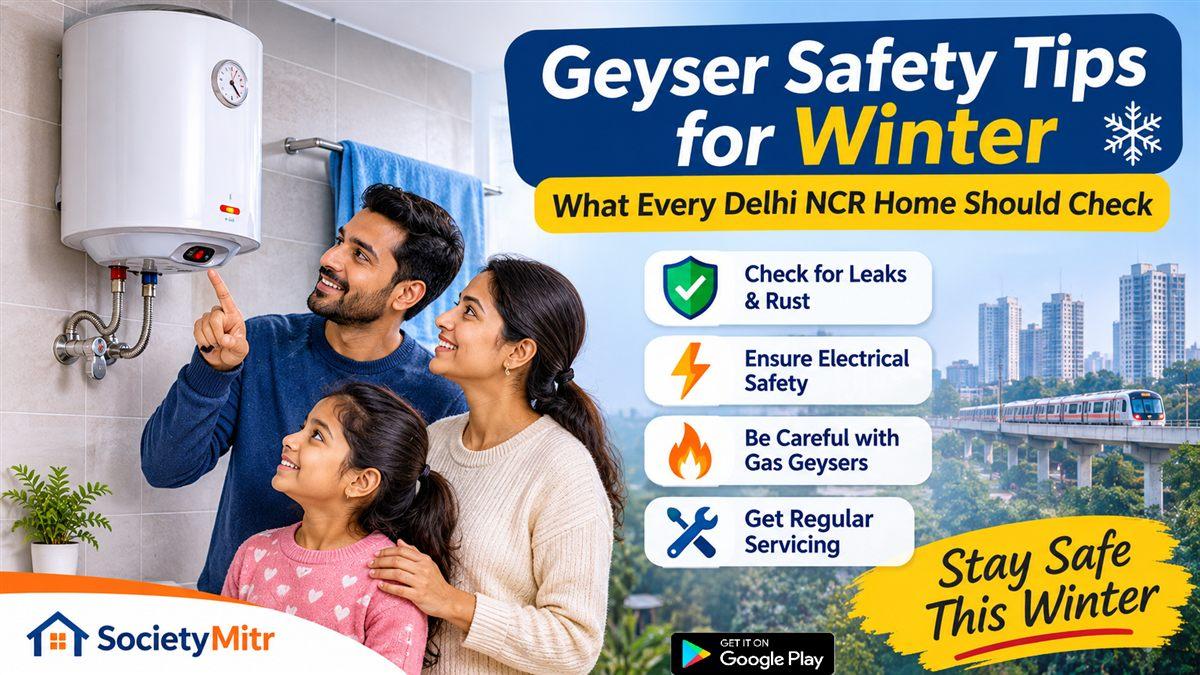
Winter has arrived in Delhi NCR, and for most homes that means the geyser is back in daily use after months of rest. It's one of the hardest-working appliances in the house from November to February — and one of the few that combines water, electricity and, in some homes, gas in a small, closed bathroom.
Every winter, news reports from across North India describe accidents involving geysers: people falling unconscious in bathrooms with gas geysers, electric shocks, and leaking or burst tanks. Most of these are preventable with a few simple checks.
Here's a practical checklist for apartments in Noida, Greater Noida, Ghaziabad and Delhi — what to check before winter, the warning signs to watch for, and when to call a professional.
Before you switch it on for the season
If your geyser has been off since March, run through these checks first.
- Look for leaks and rust. Check the tank, the pipe joints and the wall below the geyser for drips, damp patches or rust stains.
- Check the wiring and plug. Burnt marks, a loose socket or a warm plug are warning signs. The geyser should be on its own properly rated point, not an extension board.
- Make sure it's earthed. A geyser without proper earthing can give a shock through the water or the tap. If you're not sure, ask an electrician to test it.
- Test the safety valve. The pressure relief valve lets out steam or water if pressure builds up. If it's blocked, rusted or has been removed, get it replaced before use.
- Run water through it. Let the first water run for a minute to flush out sediment that settles over summer.
If anything looks wrong, don't switch it on — get it checked first.
Electric geyser safety: everyday habits
Most apartments in NCR use electric storage geysers. These habits keep them safe and make them last longer.
- Switch it off before you bathe. Heat the water, then switch the geyser off at the switch before using it. It's the simplest protection against a shock if there's a fault.
- Don't leave it on all day. A geyser left on for hours wastes electricity and keeps the heating element and thermostat under constant strain.
- Keep the thermostat at a sensible temperature. Around 50–60°C is enough for bathing. Higher settings waste power, build up scale faster and risk scalding — especially for children and elderly family members.
- Have an RCCB/ELCB on the circuit. This device cuts the power within a fraction of a second if current leaks to earth. Many newer flats have one; if yours doesn't, an electrician can add one at the distribution board.
- Keep the switch outside the bathroom. Or at least well away from the shower and out of reach of splashing water.
- Buy ISI-marked geysers and fittings. When replacing a geyser, look for the ISI mark and a reputable brand, and have it installed by a trained technician.
Hard water makes servicing more important
Much of NCR — especially homes on borewell or mixed supply — has hard water. Over a season, the minerals form scale on the heating element and inside the tank. Scale makes the geyser slower and costlier to run, and can cause the element to overheat and fail.
Most storage geysers also have a sacrificial anode rod that protects the tank from corrosion. In hard water it wears out faster and should be checked during servicing and replaced when it's used up.
Gas geysers: the most important rule
Some homes, especially independent houses and older flats, use LPG or piped-gas (PNG) geysers. Burning gas produces carbon monoxide — a gas you can't see or smell, and which can make a person unconscious within minutes in a closed space.
A gas geyser should never be installed inside a closed bathroom. It must be fitted where there's good ventilation, ideally outside the bathroom with a flue or exhaust that takes the fumes outdoors.
If you have a gas geyser:
- Keep a window or ventilator open whenever it's running, and switch on the exhaust fan.
- Never bathe with the door and windows shut while a gas geyser is on in or next to the bathroom.
- Don't let children or elderly family members bathe alone in a bathroom with a gas geyser.
- Check the gas pipe and regulator for cracks and leaks. If you smell gas, turn off the supply, open the windows, and don't operate any electrical switch.
- Consider switching to electric. If your gas geyser can only be installed inside the bathroom, an electric geyser is the safer choice.
Signs of carbon monoxide poisoning
Headache, dizziness, weakness, nausea, confusion or drowsiness while bathing can all be early signs. If someone feels this way, or is found unconscious in the bathroom:
- Turn off the geyser and open the door and windows.
- Move the person to fresh air immediately.
- Call 112 for emergency help or take them to the nearest hospital, even if they seem to recover.
Warning signs your geyser needs attention
Call a technician if you notice any of these:
- Water takes much longer to heat than it used to
- Rusty, brown or smelly hot water
- Rumbling, popping or hissing sounds from the tank
- Water dripping from the tank, valve or joints
- The MCB trips when the geyser is switched on
- A tingling feeling when you touch the tap or the water
- The water gets too hot, or doesn't stop heating
- The geyser body or switch feels hot to the touch
A tingling feeling from the tap or water is an emergency. Switch off the geyser at the MCB and don't use it until an electrician has checked it.
What a geyser service includes
A standard service before winter usually covers:
- Checking the heating element and thermostat
- Descaling the element and flushing sediment from the tank
- Checking and, if needed, replacing the anode rod
- Testing the safety and pressure relief valve
- Checking wiring, the plug point and earthing
- Checking pipe joints and inlet/outlet connections for leaks
Once a year, before winter, is a good routine. In hard-water areas, or for geysers more than five or six years old, a check-up mid-season is worth considering too.
Repair or replace?
Repairs usually make sense when the problem is a single part — the element, the thermostat or a valve. It may be time to replace the geyser if:
- The tank itself is leaking or badly rusted
- It's more than eight to ten years old and needs frequent repairs
- It's too small for your family's needs
- It's an old gas geyser installed inside the bathroom
When buying new, choose the size to suit your family (smaller instant geysers for a kitchen, storage geysers for bathrooms), look for the ISI mark and a good energy rating, and make sure installation includes proper earthing and a working safety valve.
A note for RWAs
Managing committees can help residents stay safe this winter:
- Share this checklist on your society group and notice board.
- Remind residents that gas geysers must not be installed inside closed bathrooms.
- Organise a geyser service camp. A single day when verified technicians service geysers across the society saves residents time and often gets better rates.
- Check common areas. Geysers in the clubhouse, gym changing rooms and guard rooms need servicing too.
Book a geyser service
Society मित्र connects you with verified technicians near you for geyser repair, servicing and installation. For wiring, earthing or RCCB installation, book an electrician, and for leaking pipes and joints, a plumber.
Requesting a service is free, and a professional near you will call you back. You can also book and track your request in the Society मित्र Home Services app on Android.
Frequently asked questions
How often should a geyser be serviced?
At least once a year, ideally just before winter. In hard-water areas, or for older geysers, a second check during the season helps.
Is it safe to bathe with the geyser on?
It's safer to switch the electric geyser off at the switch once the water is hot, then bathe. For gas geysers, never bathe with the door and windows closed while it's running.
What temperature should I set my geyser to?
Around 50–60°C is enough for most homes. Higher temperatures waste electricity, build up scale faster and can cause scalding.
Why does my geyser take so long to heat water?
The most common causes are scale on the heating element, a failing element or thermostat, or sediment in the tank. A service with descaling usually fixes it.
Can a gas geyser be installed inside the bathroom?
It shouldn't be. Gas geysers produce carbon monoxide, which can be fatal in a closed space. Install them in a well-ventilated area with an exhaust to the outside, or choose an electric geyser.
What should I do if I feel a shock from the tap?
Switch off the geyser at the MCB straight away and don't use it again until an electrician has checked the earthing and wiring.
Also read
- Diwali safety guide for high-rise societies
- Society मित्र Home Services app is now live on Google Play
- AC, RO, geyser and appliance repair in Delhi NCR
This guide is general safety information. For any electrical or gas fault, switch off the supply and get it checked by a qualified professional.